Lab Equipment Calibration
Accurate measurements are essential for any laboratory, whether it operates in pharmaceuticals, biotechnology, research, environmental testing, food safety, or chemical analysis. At Vaidyanatheshwara Instruments,
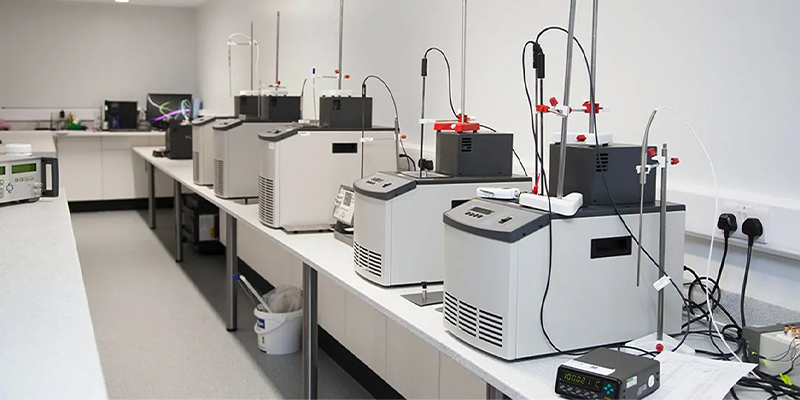
we provide comprehensive Lab Equipment Calibration Services designed to maintain measurement accuracy, reduce uncertainty, and ensure compliance with regulatory standards. Our calibration services help laboratories protect the integrity of their results and maintain safe, efficient operations.
What Is Lab Equipment Calibration?
Calibration is the process of verifying the accuracy and performance of laboratory instruments by comparing their readings to known reference standards. This ensures that the device is producing reliable, traceable, and repeatable results.
During calibration, the following are assessed:
- The difference between the instrument’s reading and the actual standard
- The measurement uncertainty
- Whether the instrument falls within acceptable tolerance limits
If an instrument is found to be out of calibration, adjustments or repairs may be required. At Vaidyanatheshwara Instruments, our technicians ensure that each device is restored to optimal accuracy before it is returned to use.
Different instruments require different calibration approaches:
- Balances are calibrated by comparing the displayed reading with certified reference weights.
- Pipettes are assessed by measuring the mass of water dispensed.
- pH meters are calibrated using buffer solutions of known pH values.
Each method ensures the highest level of precision suitable for laboratory applications.
Why Calibrate Laboratory Equipment?
Regular calibration is vital for maintaining the quality, reliability, and safety of laboratory operations. Key benefits include:
- Accurate & Reliable Results: Ensures validity of experimental data.
- Reduced Measurement Uncertainty: Minimizes variability and improves confidence in results.
- Enhanced Workplace Safety: Detects faulty instruments early, preventing hazardous situations.
- Extended Equipment Lifespan: Prevents excessive wear and functional damage.
- Compliance with Standards: Supports GLP, GMP, ISO, NABL, and regulatory audits.
With periodic calibration, laboratories can maintain consistency and avoid costly inaccuracies.
Laboratory Balance Calibration
Laboratory balances are highly sensitive instruments that must be calibrated frequently. The exact calibration frequency depends on usage, environmental conditions, and laboratory quality standards—some labs calibrate daily, while others do so weekly or monthly.
How We Calibrate Balances:
- The balance is placed on a stable, vibration-free, draft-free surface.
- It is zeroed or tared.
- Certified reference weights are placed on the balance.
- Readings are compared to the known mass values.
- The balance passes if readings fall within acceptable error limits; if not, adjustments are made.
If the instrument does not meet the pre-set tolerance range, it is removed from service and inspected further before being calibrated again.
Pipette Calibration
Pipettes play a crucial role in delivering accurate volumes of liquids. Even slight errors in pipetting can lead to significant variations in experimental outcomes, which is why pipette calibration is an essential part of Good Laboratory Practice (GLP).
Most labs perform pipette calibration every 3 months.
How We Calibrate Pipettes:
- A clean container is placed on a calibrated balance and zeroed.
- A known volume of water is dispensed from the pipette.
- The mass is recorded and converted to volume.
- This step is repeated 5–10 times.
- Accuracy is calculated using the average dispensed volume versus the intended volume.
Any deviation outside acceptable limits is corrected or adjusted.
pH Meter Calibration
pH meters naturally drift over time due to electrode aging, contamination, and environmental factors. Regular calibration ensures accurate chemical and biological measurements.
Multi-Point pH Calibration Process:
- Select fresh pH buffer solutions, typically pH 4, 7, and 9.
- Put the meter in calibration mode.
- Rinse the electrode and immerse it in the first buffer.
- Wait for a stable reading and set it to the known pH value.
- Repeat for additional buffer points.
This ensures precision across the full pH range being measured.
Faqs
To ensure your lab instruments give accurate and reliable results .
It depends on usage, but most labs calibrate key instruments regularly—some monthly, others quarterly.
Balances, pipettes, pH meters, and various lab measuring tools.
It will be adjusted or serviced to restore accuracy.
Yes, every calibration includes a detailed certificate.
Conclusion
For laboratories striving for accuracy, consistency, and reliability, regular calibration of equipment is essential. At Vaidyanatheshwara Instruments, we provide complete calibration services for balances, pipettes, pH meters, and a wide range of laboratory instruments. Our experienced technicians, controlled calibration environment, and traceable methodologies ensure that your equipment performs with precision and supports high-quality laboratory operations.
By partnering with us, your lab can reduce downtime, prevent costly errors, meet regulatory standards, and ensure safe and successful scientific work.